Key Takeaways
- The Waterloo Regional Health Network (WRHN) formed from the merger of Grand River Hospital and St. Mary’s General Hospital on April 1, 2025.
- WRHN has achieved significant milestones, including offering innovative medical procedures and earning top accreditation.
- Three main WRHN sites provide a range of services, including cancer care, cardiac services, and rehabilitation in Kitchener.
- Plans for a new acute care hospital address future growth, with projected population reaching one million by 2050 in Waterloo Region.
- Proximity to WRHN can influence homebuyers’ decisions, highlighting its importance for families and retirees.
When you’re deciding where to put down roots, access to good health care sits near the top of the list, right alongside schools, commute times and parks. In Kitchener-Waterloo, that conversation now starts with one name: Waterloo Regional Health Network, or WRHN.
If you’ve lived here a while, you probably still call the hospitals by their old names. Here’s what changed, what’s available today, and what’s coming for one of the fastest-growing regions in Ontario. Furthermore, the Waterloo Regional Health Network is now central to discussing local health care transformation.
Two Hospitals, One Health System
On April 1, 2025, Grand River Hospital and St. Mary’s General Hospital officially merged to form WRHN. The two hospitals had worked side by side for more than 90 years, and bringing them together under one board and one leadership team was designed to reduce duplication, share specialists and plan for the region’s future as a single system under the Waterloo Regional Health Network.
The first year delivered results. WRHN became the first centre in Southern Ontario to perform endoscopic spine surgery, introduced Ontario’s first SmartSync MRI for patients with cardiac devices, and launched a pharmacist-led breast cancer clinic. It also earned Accreditation with Exemplary Standing, the highest rating from Accreditation Canada, and was named to Newsweek’s World’s Best Hospitals 2026 list for Canada.
Where to Find WRHN Today
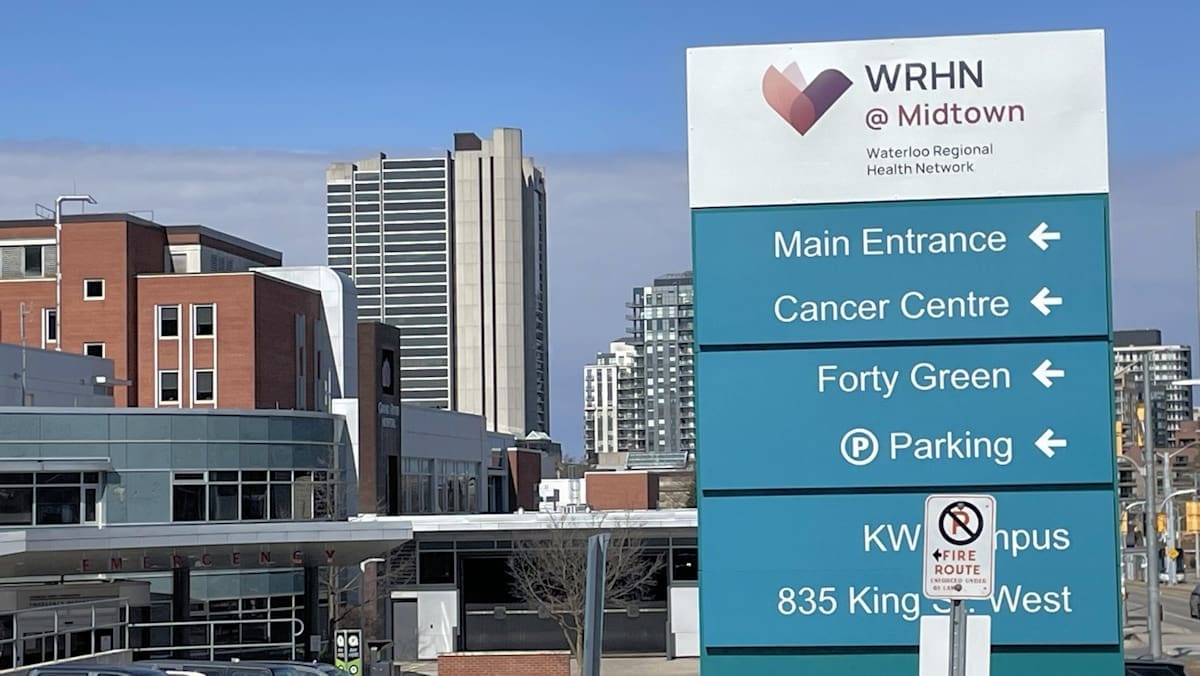
WRHN operates three main sites in Kitchener, and the new names can be confusing at first. These are all managed by the Waterloo Regional Health Network.
| Site | Address | Formerly | Emergency |
|---|---|---|---|
| WRHN @ Midtown | 835 King St. W., Kitchener | Grand River Hospital, KW campus | Yes |
| WRHN @ Queen’s Blvd. | 911 Queen’s Blvd., Kitchener | St. Mary’s General Hospital | Yes |
| WRHN @ Chicopee | 3570 King St. E., Kitchener | Grand River Hospital, Freeport campus | No |
Midtown is home to the regional cancer centre and sits right on the ION LRT line. Queen’s Blvd. is known for regional cardiac care. Chicopee focuses on rehabilitation, complex continuing care and mental health. Together, WRHN runs seven regional programs serving Waterloo-Wellington and beyond as part of the Waterloo Regional Health Network.
A New Hospital for a Growing Region
The biggest story is what’s coming. Waterloo Region is projected to reach one million residents by 2050, and WRHN is planning a brand-new acute care hospital to keep pace. The site is in the David Johnston Research + Technology Park at the University of Waterloo’s north campus, chosen for highway and transit access and for its link to university research. WRHN completed the land purchase in early 2026, and the Province of Ontario has committed $10 million toward planning.
Projects like this typically take 10 years or more, so don’t expect shovels tomorrow. Once it opens, Midtown will become an urgent care and outpatient surgery centre, Chicopee will expand rehab and mental health services, and acute care will move out of Queen’s Blvd., with that site’s future still to be decided. You can follow the project at Future of Care Together.
What It Means for Homebuyers
For buyers, WRHN’s plans are worth watching. Being close to a hospital matters to families with young kids, retirees and anyone managing ongoing care, and major health-care investment tends to bring jobs, services and new development with it.
Today, neighbourhoods near Midtown and Queen’s Blvd. put two emergency departments within easy reach, and Midtown’s spot on the LRT line makes it convenient without a car. Looking ahead, the future hospital could reshape demand in north Waterloo, the university area and nearby communities.
Thinking about a move in Kitchener-Waterloo? The My Home in KW team at Royal LePage Wolle Realty knows these neighbourhoods inside and out. Reach out and we’ll help you find a home close to what matters most to you. Thus, proximity to the Waterloo Regional Health Network can be a significant advantage for homebuyers.
Disclaimer: This article is for general information only and is not medical advice. Hospital services, locations and project timelines may change; please visit wrhn.ca for the most current information.